News

weight loss

How sleep can keep you reaching for the junk food

Everything about the human body is interconnected and eating habits are no different. Sleep plays an important role in not only what you eat but how much and when you eat it.

Lack of Sleep Changes Your Hormones

We get our energy from sleep or from food. People who get less sleep tend to snack on high-fat, carbohydrate-rich foods, possibly looking for the energy that they didn’t get from sleep the night before.

When you don’t get enough sleep, your hunger and satiety (fullness) hormones, including leptin and ghrelin get released in different amounts, making you more hungry and less full!

Sleep Gives You the Advantage

Getting adequate sleep 7-9 hours per night for adults, lets you work with your body rather than against it. Stress, long work hours, family obligations, an uncomfortable mattress, and insomnia are only a few of life’s challenges that may get in your way of a good night’s rest.

Here are 4 simple steps you can take to promote good sleep hygiene and get a more restful sleep:

· Turn off the screen. Televisions, laptops, e-readers, and smartphones all give off light that can interfere with your natural sleep cycle. Shut off the screens an hour before you want to go to bed to help your body recognise that it’s night-time and it should be preparing for sleep.

· Limit caffeine and alcohol. While some may believe alcohol can help you sleep, it changes your body’s sleep patterns and can lead to wakefulness. Try to avoid caffeine after lunch and alcohol at least four hours before bedtime.

· Create a bedtime routine. Help set your circadian rhythms with a relaxing bedtime routine. Read a book (not on a screen), try some gentle meditation or yoga, or take a warm bath to help relax your mind and body. As you do your routine regularly, your body recognises when it’s time to prepare itself for resting. If you find yourself dreading bedtime because you feel discomfort or pain in bed, it might be time for a new mattress.

· Go to bed at the same time every day. Try to keep the same sleep schedule every day of the week. Your body prepares to sleep and wake up long before you do. A regular bedtime helps it stay on track, which in turn helps you in your quest for a healthy lifestyle.


weight loss

Are you an emotional overeater?

Do you spend all day eating well but comfort eat when you get home? Do you eat healthily during the week but overeat on the weekend? 

You can’t just adopt more willpower to stop emotional or binge eating. Here are some of my favourite tips to stop emotional and binge eating.

1. Give yourself permission to eat the foods you want to eat.

When you don’t give yourself permission to eat certain foods, you’ll feel the need to eat that food in private, in excess and as quickly as possible in case you never get to eat it again.

When your body trusts that you aren’t being deprived, you will stop emotional eating and no longer feel the need to binge on this food.

2. Stop judging food.

Avoid referring to food as ‘good’ or ‘bad’.

When you ‘try to be good’ and avoid fattening or ‘bad’ foods, you’re only setting yourself up for more emotional and binge eating.

Feeling guilty or getting angry with yourself for overeating will only cause you to binge more – not less.

You can’t shame yourself into bingeing less.

3. Eat treats in front of other people.

Avoiding ‘bad’ foods in front of other people will only cause you to binge on them later in private.

To stop emotional eating, give yourself permission to eat your trigger foods in public.

That means order the peanut butter on toast at a café, say yes to the dessert when offered and grab an ice cream with a pal.

4. Do not eat in front of the TV.

When you eat in front of the TV, you condition your body to get hungry and feel like eating when you turn on the television.

Never eat in front of the TV or any screen, and eat. Give yourself permission to eat – and watch TV, but not at the same time.

5. Stop striving for weight loss.

Ironically, aiming to lose weight will prevent you from reaching your goals.

Shift your focus from trying to lose weight to building a healthy relationship with food.

Because when you have a healthy relationship with food – you’ll stop emotional and binge eating and your body will naturally find it’s healthiest weight.

6. See each binge as an opportunity to learn.

A binge is not a failure it’s simply your body’s way of trying to get your attention and tell you something.

Feeling guilty, angry and promising to ‘get healthy tomorrow’ will make you restrict again, causing another binge.

Stop fighting against your body and learn to listen to what it’s trying to say. This is the only way to stop emotional and binge eating.

7. Get extra support to stop emotional eating

It’s tough to stop emotional and binge eating without support.

You don’t need to ‘just try harder’ – you need to try something different.


If you want a personalised diet plan, please contact Susan for further information.

← Back

Thank you for your response. ✨


weight loss

Calories versus nutritional intake

Many people on diets when they are trying to lose weight, think about low-fat foods rather than the nutritional value of the foods they are consuming.  Some then may consume large amounts of these foods, because they may be ‘free’ on their particular diet plan, or they perceive them to be heathy, though these foods may not always be the best choice

When just calorie counting, because high fat food are calorie dense they are often avoided,  and you could end up eating a very nutritionally poor diet and even become malnourished, especially if you live on a low-fat diet for long periods of time, and take no additional supplements or minerals. The government recommended 2000 Calories for women is based on nutritional need as well as energy.

Some vitamins are fat soluble in particular A, D, E and  K, and foods that are high sources of these vitamins are often avoided in those following a low-fat diet, and small amounts of theses vitamins are required in the diet to promote growth, reproduction, and health.

Vitamin A – It occurs naturally only in foods of animal origin, such as liver, butter, whole milk, and egg yolks, but the body converts certain carotenoids (found in some fruit and vegetables), especially β-carotene, to vitamin A.

Vitamin D –  occurs naturally only in animal foods such as liver, butter, fatty fish (fish containing high levels of cholesterol or fatty acids as glycerides), and egg yolks. It is also synthesised in the body from sunlight. Vitamin D is essential for bone health since it serves to maintain serum calcium concentrations, which in turn influence bone mineralization.

Vitamin E  –  is an important antioxidant that is thought to protect polyunsaturated fatty acids from oxidative destruction in cell membranes. Vegetable oils are the richest source of vitamin E. Other good sources include nuts, seeds, whole grains, and wheat germ.

Vitamin K  – is needed in the liver for formation of several blood clotting factors. Larger amounts of vitamin K are present in dark-green leafy vegetables; lower levels are found in cereals, dairy products, meats, and fruits.

Yogurt itself is a nutritional powerhouse as part of a balanced diet,  yogurt can be a great source of protein, calcium, iodine and vitamin B12. Fermented dairy products have long been considered to be beneficial to digestive health, and yogurt has even been associated with lower risk of obesity and cardio metabolic risk in both children and adults. Natural, ‘plain’ and Greek-style yogurts were found to have a dramatically different nutrient profile from all other types of yogurt, containing much higher levels of protein, lower carbohydrates level and the least amount of sugar, with the average of five grams per 100g, largely made up of naturally occurring lactose.

Take a look at three yogurts, first a low-fat fruit yogurt.  It’s virtually fat-free, provides a good amount of calcium, but if your diet is lacking in vitamin D you won’t see the benefit. Per 100g of this product 7.1g is labelled as sugar, the source of this sugar does not have to be separated so this level will be spread between milk sugar (Lactose), the added strawberries (10% of product), and the added fructose.  A full fat plain yogurt with nothing added tends to have around 4.7g-5g of sugar per 100g, so this low fat yoghurt has over 2g of added sugar per 100g (a pot being 175g), very little of this will be from the strawberry, with the remaining added as fructose and to ensure a sweet tasting product added aspartame. The danger arises when individuals see these as healthy alternatives, they may have 1, 2 or even more per day, but with each pot containing the equivalent of around 1 teaspoon of added sugar, this can soon add up.

Screenshot 2018-11-20 at 13.10.20.png

A full fat organic strawberry yogurt, is nearly 100% more calories per 100g, and has 4% fat, with similar protein levels and over 3g more sugar, than a low-fat version. The fat content will help you stay fuller for longer so long-term you may only need one yogurt rather than three, and the fat will contain vitamin D to help you absorb the calcium.  This strawberry yogurt product is honest and specifies they add 4.9% of sugar per per 100g, but many do not ,they just state added sugars just total sugars, making you believe that the sugars are from fruit and therefore healthy. This yogurt is served in 100g portions so not as bad as you may think.

Screenshot 2018-11-20 at 13.46.16.png

The third option plain greek yogurt and add your own fruit, nuts, seed, no need to add any additional sugar.

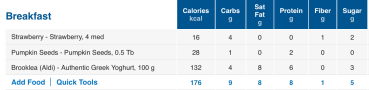
Below, shows that a 100g of greek yogurt with 4 strawberries and 1/2 tablespoon of pumpkins seeds, this is 2g less sugar than the low fat version, but will have more strawberries, and added protein, it also gives you a little fibre. This is a higher fat and calorie version but the fat should help you to feel fuller for longer, making it a suitable breakfast. Greek Yogurts tend to be lower in lactose and higher in protein than other yogurts, but make sure you read the labels since some manufacturers add thickening agents to regular yogurt, and market it as “Greek-style” yogurt, which may not share the same health benefits as Greek yogurt.

Screenshot 2018-12-30 at 17.57.45

The three strawberry yogurts compared based on their serving size:-

Screenshot 2018-12-30 at 17.55.22

weight loss

Malnutrition in the elderly

Recent research has shown an increase in malnutrition in the elderly. Poor nutritional status and malnutrition in the elderly population are important areas of concern. Malnutrition and unintentional weight loss contribute to progressive decline in health, reduced physical and cognitive functional status, increased utilisation of health care services, premature institutionalisation, and increased mortality.

One in ten adults over the age of 65 are malnourished or at risk of being malnourished , with over 90% of these individuals living independently. Malnutrition is often due to one or more of the following factors: inadequate food intake; food choices that lead to dietary deficiencies; and illness that causes increased nutrient requirements, increased nutrient loss, poor nutrient absorption, or a combination of these factors.

When financial concerns are present, meals are often skipped and food that is purchased may not provide a nutritionally adequate diet. Declines in functional status both physical and cognitive, affect a person’s ability to shop for food and to prepare meals.

Nutritional problems are further compromised by inadequate social support networks and by the resultant social isolation, which commonly leads to apathy about food and therefore decreased intake. Late life can be a time of multiple losses. The older person has experienced change and loss through retirement, disability and death of friends and family as well as change in financial, social, and physical health status. These changes may lead to depression, a well-known cause of anorexia and weight loss. Even transient depressed mood (as with bereavement) can cause clinically significant weight loss.

Dehydration is common among older people and especially older people with dementia. People may not recognise they are thirsty, may forget to drink, may be unable to communicate that they are thirsty, or may refuse to drink because they are worried about incontinence.

Dehydration can cause headaches, confusion, irritability, falls, loss of appetite and constipation which can contribute to urinary tract infections – and these infections in turn can lead to incontinence. Older people who are incontinent need to drink more, not less, in order to encourage the bladder to empty regularly to prevent infection and to exercise the bladder muscles.

How can you help an elderly relative or neighbour?

If you have significant concerns with any sudden weight loss or other symptoms try and see if the individual would see their GP for a health check up.  An online screening tool is available which looks at the individuals weight now and three months ago to determine risk.

  • Having small, nutritious meals more often across the day can help if people have a poor appetite
  • Make sure drinks given between meals offer nutrients as well – for example, milky drinks, fresh fruit juices and smoothies
  • Make available nutritious snacks that the person can eat while moving around, for example some individuals with dementia pace around constantly and have high energy needs. Finger foods can be left out on the route that the older person may take when they wander.
  • It is important to remember that older people need to eat good food whatever their weight, and that overweight people can be under-nourished too, if they don’t get enough nutrients.
  • Ensure they stay hydrated, this can be from drinks such as tea, coffee, water, milk, fruit juice and smoothies and via the food they eat, soups, stews, fruit and vegetables, ice cream and yoghurt.
  • Older people with dementia may choose sweet foods over savoury ones and it has been shown that a craving for sweet foods is part of the clinical syndrome for dementia at some stages. If people eat only sweet foods – for example, if they just eat desserts – they will not get all the nutrients they need. However, it can be useful to add some sweet ingredients to dishes, to encourage people to eat a range of foods – for example, adding sweet apricots to a meat dish, adding fruit to salads and snacks, adding honey to porridge or milky puddings, or adding jam to peanut butter sandwiches, might encourage the person to eat the food and also make a useful contribution to nutrient intake.

If you want a personalised assessment of yours or a relative current diet and a weeks meal plan please contact Susan.

← Back

Thank you for your response. ✨

Uncategorized

Mediterranean diet

Susan has returned from a lovely week in Crete, the original home of the Mediterranean diet, this diet has been researched for many years and has shown many positive effects for health.

For thousands of years Cretans have eaten only what their land produced – which was lots of fruits, vegetables, olives, whole grains and pulses.  Cretans consume a great deal of olive oil, significantly more than any other Mediterranean people and they don’t use any other type of oil. Todays diet can not be exactly replicated since lifestyles have changed since the 1950’s.

IMG_20180903_190406959

Fat makes up about 35%-40% of daily calories in the Cretan diet. Cretans get their fat from olive oil and olives instead of butter, meat and other oils .

Cretans ate more fruit than any of the other Mediterranean countries and much more than other countries in the study

The average Cretan consumed 9-12 servings of fruits and vegetables each day compared to the current USDA recommendations of about 4.5 servings combined. Wild Greens were popular during the study but are very hard to find now.

The main grains consumed were the whole grains barley and wheat in the form of bread, rolls and rusk. Bread was typically made from all barley or a combination of barley and wheat, rusks from a barley and wheat mixture, Bread was eaten daily (usually with lots of olive oil).

Pulses – Were consumed about 3 times per week

Nuts – Nuts consumed in Crete are most often almonds, hazelnuts, chestnuts and walnuts.

Eggs – While eggs were not a huge part of the Cretan diet, they did consume 2-3 eggs a week. The biggest difference is that the chickens that produced the eggs were all free-range chickens that instead of eating grains like chickens in the US, lived on figs, grasses, insects, worms and purslane. This not only made the chickens healthier, but meant that the eggs are excellent sources of omega-3 fatty acids

Fish and chicken is eaten a few times a week with red meat saved for special occasions.

Food is flavoured with lots of herbs, all vegetables we ate were flavoured with herbs, as with the fish. Meat portions were small, and lots of vegetable were available – The hotel made the tastiest courgette Ive ever tasted, and tomato grown in the sun tastes so different than ones grown in a green house.

Susan was there for only 6 days, having a breakfast of Greek Yoghurt and fruit, followed by a small meat free cooked breakfast. Evening meal always started with a large selection of salad, with some feta cheese. Main meal fish and vegetables and potato cooked in olive oil, since she was on holiday she did try the delicious deserts. Midday snack my sons favourite, frozen greek yoghurt with strawberries and kiwi (highly recommend Andriani’s Homemade Ice and Frozen Yoghurt) and came back 1llb lighter, I never went hungry and felt really nourished. Susan will certainly will be eating this way more at home.

IMG_20180904_132940328


weight loss

Its not all about the calories

Today the headlines are about reducing calories in processed and takeaway foods, and encouraging people to choose the lower calorie options.

The report also states that women should not consume more than 2000 calories per day, however everyone is not equal and into todays more sedentary life styles, daily calorie requirement are actual lower for the majority of people.  Height and age also effect the calories required, for example Susan burned 2200 calories last Sunday, but that included a 10k run, compared to Thursday where the only exercise was a 2 mile dog walk and she burned 1600 calories, so without the exercise Susan’s daily calorie requirement would be much lower than the average quoted.  It’s not good to get too worried about daily calories but look at it on a weekly basis as quite often it will all balance out and stop any unhealthy relationships with food.

Every person has an individual daily requirement, your basic metabolic rate (BMR) this is the daily calories that your body requires to stay healthy and not lose weight assuming you didn’t leave your bed all day, however these calories should be nutritious and not empty calories.  Your  individual total calorie requirement will then be based on how active you are in the day, the more active the more calories you will require to stay at your current weight, if you are trying to lose weight lower your calorie requirement by 200/300 calories per day.  Apps such as fitbit or my fitness pal, allow you to calculate your BMR and then track your food intake to allow you to have a rough idea (they will not be scientifically accurate) of your calories in compared to your calorie out, tracking food over the course of a week is a good idea, it makes your more mindful of foods that you are eating and looks at the macro nutrients balance as well. The three macronutrients (Carbohydrates, protein and fat) all have their own specific roles and functions in the body, and all supply us with calories or energy. For this reason, the body requires these nutrients in relatively large amounts to grow, develop and continually thrive. Remember macro means large, though many diets the proportion is out we eat far higher carbohydrates and proteins than required and too little fats. Healthy fats are an essential part of our diets, good fats come from nuts and seeds and their oils and oily fish.

If you rely on processed meals, its important to not just go for the lowest calorie option, in the long run this may not be the best for your health.   For example a ham sandwich on white bread is 275 calories, this is processed meat, giving 42% of your daily sodium, 9% of fibre, 33% of your protein, wheres as a wholemeal chicken sandwich with lettuce is 328 calories per serving, however sodium is 6% of daily requirement, fibre 22% of daily requirement, 60% of daily protein, along side having a portion of salad and benefits of B vitamins in the bread a far better choice.


Uncategorized

Prescription medication, vitamins, supplements and food.

When you take prescription or over-the-counter (OTC) medications, do you also take also a vitamin, mineral, or other dietary supplements? Have you considered whether there is any danger in mixing medications and dietary supplements?  It is  widely highlighted that grapefruit juice affects the way your medicines work, especially if you have high blood pressure or arrhythmia (irregular or abnormal heart beat).  It can effect other drugs as well,  but the severity of the interaction can be different depending on the person, the drug, and the amount of grapefruit juice you drink.

Many drugs are broken down (metabolized) with the help of a vital enzyme called CYP3A4 in the small intestine. Grapefruit juice can block the action of CYP3A4, so instead of being metabolized, more of the drug enters the blood and stays in the body longer. The result: too much drug in your body.

There is now further research that shows that grapefruit juice can also have the opposite effect.  Fexofenadine an anti-histamine, instead of changing metabolism, grapefruit juice can affect proteins in the body known as drug transporters, which help move a drug into our cells for absorption. As a result, less of the drug enters the blood and the drug may not work as well.  Orange Juice and apple juice also have the same effect with this medication so its important to always read the leaflet that comes with your medication.

St. John’s wort can decrease the effectiveness of birth control pills, leading to breakthrough bleeding and an increased risk of unintended pregnancy. It also interacts with anti – depressants, statins, and many others.

Herbs that decrease blood sugar may interact with anti-diabetes drugs to cause blood sugar to drop too far.

Echinacea a popular supplement at this time of year, but there are many interactions, especially with medications that follow the CYP3A4 pathway since these all have  toxic effects on the liver.

There are lots of reports in news that as well as vitamin D being a common deficiency in the UK this is closely followed by magnesium, however magnesium tablets can interact with blood pressure tablets and antibiotics.

The list is not exhaustive,  before you take any medication either prescribed or over the counter , vitamins, supplement or herbs please check for any interactions.  Please also mention all medication, herbs, supplements and vitamins, to medical staff and your nutritionist.

© 2018 – 2024 Susan Monk .

soup

Meat Free Monday, veganary or just looking to reduce your meat consumption.

Many people are looking to reduce their meat consumption after the festive period, some are looking to become vegetarian or vegan for a month, some will follow meat free Monday for the whole year, whatever your reason there are lots and lots of tasty recipes easily available on the web for you to try.  For some they choose to ty meat substitutes or ready meals, but remember a highly processed diet is unhealthy in the long term it doesn’t matter if it comes with a ‘healthy’ label.

First thing most people find difficult when they swap to no meat is that there is no centrepiece to their meal, the meat was the focus, the whole meal is the focus with many vegetarian dishes, also many people are soon put off eating dishes with lots of vegetables since they find the preparation time consuming, if need by when changing your diet cheat, use ready made curry paste, ginger/ garlic purees and ready prepared vegetables.

Susan’s Meat Free Monday meal for her family today is River Cottage’s Fragrant Veg stoup served with brown basmati rice, it took about one hour to cut, chop and cook but the kitchen smells lovely.

For just the soup it comes in at around 340 calories per serving, this was made using full fat coconut milk so you can reduce the calories if you use a lower fat version.   It is high in saturated fat due to the coconut milk so not a meal to have every day.  The stoup provides 15% of your daily protein, 105% of your vitamin A, 10% of your potassium requirements, handy for those on diuretics that tend to be low in potassium due to the medication, low in carbohydrates 9%, high in fibre 26% of daily requirements  and 50% of your daily vitamin C, with 5% of your daily iron.

Add in 100g of cooked Basmati Rice – Basmati rice is lower GI than all other rices so better to help keep blood sugar levels stable.  Basmati has the highest content of all rice for amino acids and essential nutrients.

Percentage daily values are based on a 2000 Calorie per day diet.


Uncategorized

Christmas Day Food

Nutrition experts reckon that the average food and drink intake on Christmas day could add up to a staggering 6,000 calories!  And whilst it’s true that much of this comes in the form of sugary desserts and snacks (mince pies, Christmas pudding…) and calorie-laden alcoholic drinks, there are also some seriously nutritious aspects too.

Most people eat excess over Christmas, we’ve all got our favourite must haves, if it’s only for a day or two, don’t worry.  I see so many people worrying how they are going to manage their diets. What can they eat to keep their calories down? Stress is just as bad on the body as poor food choices, if you want to have one or two days of less heathy food choices try not to worry, a walk after a meal will help to regulate the blood sugar, alternate your alcoholic drinks with a soft drink – preferably not high sugar fruit juice, water / fruit teas are the best alternative if you are drinking more alcohol/ coffee than usual since both these drinks are dehydrating. On your plate pile it high with veg, or use a smaller plate so you are having smaller amounts but not depriving yourself of any of the tasty treats.

Christmas day in Susan’s house is normally a late breakfast and then the main meal of the day sometime between 2 and 3, with sandwiches on offer at supper for the teenagers who are never full. Traditions play a big part in the Christmas food, but the meat of choice is chosen each year by a different person, so turkey is not a regular option, this year its a game roulade.

The breakfast which we have at every major celebration is eggs benedict – with salmon,  this is a good source of protein to start the day which helps keep you fuller for longer and stops you dipping into that box of chocolates. On Christmas day it is normally served with  a glass of orange juice (with perhaps some added fizz), the vitamin C in the orange juice helps the body absorb the iron.

Staying with tradition, the teenagers like the same starter every Christmas, so it’s prawn cocktail in Susan’s house.  Prawns are even lower in calories and fat than chicken yet with much more protein. As well as being high in protein, prawns contain magnesium, which plays a role in bone development and nerve and muscle function; Zinc, which is good for growing bodies, and selenium, an important antioxidant, add in some shredded lettuce for some extra goodness and wholemeal bread for fibre and B vitamins, quite a balanced starter.

On to the main event, by having roasted parsnips and potatoes, the fat content lowers the GI level and slows down the rate at which they raise blood sugar so while higher in calories, it can be beneficial to eat them roasted and limit your portion of starchy sugary veg.

Parsnips – Parsnips are rich in potassium, manganese, magnesium, zinc, iron, folate and phosphorous. It is also an excellent source of fibre, as well as vitamins B, C, E and K,

Sprouts are a superfood and have many nutritional benefits so pile them on to your plate – This food is low in Saturated Fat and Sodium, and very low in Cholesterol. It is also a good source of Protein, Thiamin, Niacin, Vitamin B6, Pantothenic Acid, Iron, Magnesium, Phosphorus and Potassium, and a very good source of Dietary Fibre, Vitamin C, Vitamin K, Riboflavin, Folate, Copper and Manganese. They also contain powerful glucosinolate phytonutrients, which support the body’s detoxification enzymes, helping to clear potentially carcinogenic substances from the body more quickly.

Broccoli – It is a very good source of dietary fiber, pantothenic acid, vitamin B6, vitamin E, manganese, phosphorus, choline, vitamin B1, vitamin A (in the form of carotenoids), potassium and copper. Broccoli is also a good source of vitamin B1, magnesium, omega-3 fatty acids, protein, zinc, calcium, iron, niacin and selenium.

Cauliflower –  Is an excellent source of vitamin C, vitamin K, folate, pantothenic acid, and vitamin B6. It is a very good source of choline, dietary fibre, omega-3 fatty acids, manganese, phosphorus, and biotin.

Turkey Breast – 

The good: This food is low in Saturated Fat. It is also a good source of Riboflavin and Phosphorus, and a very good source of Protein and Selenium.

The bad: This food is high in Cholesterol, and very high in Sodium.

The dark meat normally has more calories and fat per 100g.

Nut roast – While normally higher in calories than a meat alternative, the calories are beneficial fats and they are packed full of vitamins and minerals. Since nut roasts vary considerably depending on ingredients, there will be good quality roasts with higher % of nuts and some that are more breadcrumb/ loaf than nuts.  A slice of a good quality nut roast will provide protein, good source of Vitamin A, C, E, copper, folate, iron, manganese, phosphorus, riboflavin, selenium and thiamine.

Christmas pudding  – Topped with a dollop of brandy cream, these are not seen as healthy, but if you can find a pudding that is packed with fruit and nuts and less carbohydrate, limit the cream you can gets some benefit from the fruit and fibre in the pudding- lots of dried fruit is not recommended for those with insulin resistance or type 2 diabetes due to the effect on blood sugar so  small portion of pudding only.

Raisins

These can help head off high blood pressure, provide energy-boosting iron and are rich in protective antioxidants.

Sultanas

Like raisins, sultanas are dried grapes and share many of their health benefits including potassium and iron. Sultanas are a source of calcium, magnesium and manganese which strengthen bones and help head off osteoporosis

Currants

With four times the immune-boosting vitamin C of oranges, several studies suggest currants can help combat winter sniffles by inhibiting the flu virus, reducing inflammation in the airways and boosting levels of friendly gut bacteria that strengthen the immune system.


Uncategorized

Flavonoids

Flavonoids are one of my recommendations for many of my female clients to help with PMS symptoms, and while a deficiency in flavonoids does not cause any disease it does offer protection against inflammation and some degenerative diseases.
Recent research has shown some correlation between flavonoid intake and low incidence of dementia. Flavonoids were found to be involved in the reduction of oxidative stress through mechanisms regulated by the glyoxalase pathway, proving beneficial for many degenerative conditions and neurological conditions.
The flavonoid nutrient family is one of the largest nutrient families known to scientists. Over 6,000 unique flavonoids have been identified in research studies, and many of these flavonoids are found in plants that are routinely enjoyed in delicious cuisines throughout the world. In terms of nutrient richness, we get far more flavonoids from plant foods than from animal foods, and in particular, vegetables and fruits can be especially nutrient-rich in this type of phytonutrient.
Flavoinids may be broken down into 5 groups.
flavonols flavan-3-ols* flavones flavonones anthocyanidins
onions apples parsley oranges blueberries
apples bananas bell peppers grapefruit bananas
romaine lettuce blueberries celery lemons strawberries
tomatoes peaches apples tomatoes cherries
garbanzo beans pears oranges pears
almonds strawberries watermelon cabbage
turnip greens chili peppers cranberries
sweet potatoes cantaloupe plums
quinoa lettuce raspberries
garbanzo beans

Flavonoids  content in foods however are significantly reduced by storage and cooking. Onions can lose up to a quarter in the first two weeks of storage, and many are water soluble with 80% lost into the cooking water.

One of the best sources after purple fruit and berries is the pith in oranges, by drinking concentrated orange juice when the fruit is processed rather than squeezed you can obtain a  higher concentration of flavonoids than freshly squeezed juice.